The adamantine core of reality, held in the hand of compassion.
The vajra is the quintessential symbol of the unshakeable. In Himalayan art, it appears as a small, beautifully proportioned sceptre, usually bronze or silver, but its meaning reaches far beyond its physical form. It is a gesture toward something that cannot be broken, cannot be corrupted, and cannot be destroyed—the awakened nature of mind itself.
What is it?
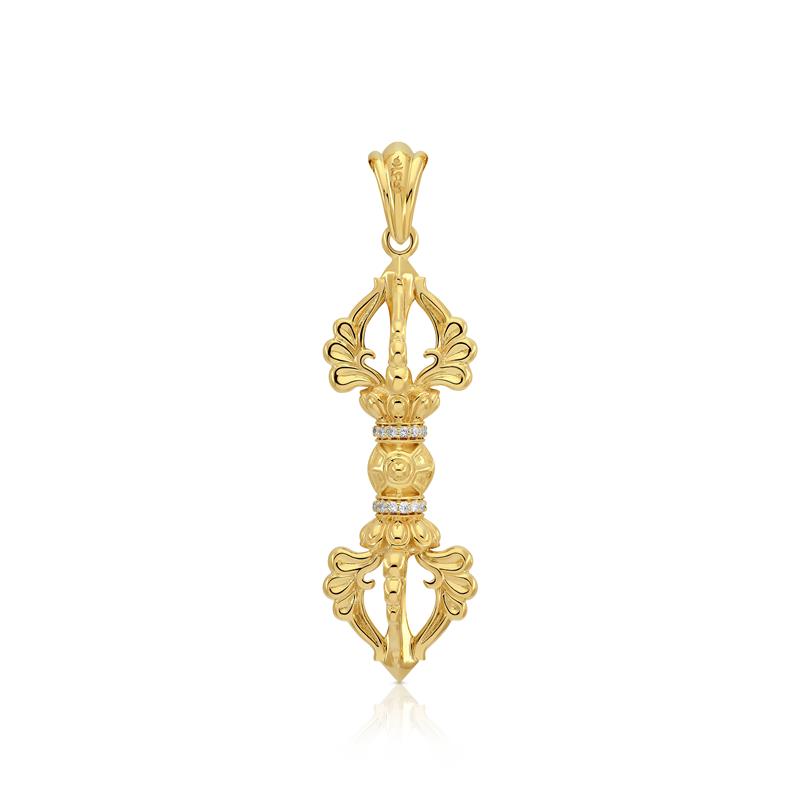
A vajra is a ritual object, typically cast in metal, consisting of a central sphere from which two sets of prongs emerge, one at each end. The most common form has five prongs on each side, though three, seven, and nine-pronged versions exist. The prongs curve inward to meet at a tip, creating an elegant symmetry that combines a sense of poised strength with refined craftsmanship.
In Vajrayana Buddhism, the vajra represents the male principle of method (upaya)—the active, compassionate engagement with the world. It is always paired with the bell (drilbu), which embodies the female principle of wisdom (prajna). Together they form a complete symbolic unity, and no serious ritual practice is conducted without both.
Origins
The vajra has pre-Buddhist roots in the Indian subcontinent, where the term originally referred to the thunderbolt weapon of the sky god Indra. Indra’s vajra was forged from the bones of a sage and was said to be indestructible, capable of cleaving through any obstacle. When Buddhism absorbed and transformed the tantric traditions of medieval India, the vajra was reinterpreted as a symbol of the mind’s adamantine quality.
The Sanskrit word vajra carries a double meaning: “diamond” and “thunderbolt.” The diamond points to something that cuts but is never itself cut, while the thunderbolt conveys the sudden, brilliant illumination of awakened awareness. In Tibetan, it is known as dorje (རྡོ་རྗེ་), literally “lord of stones,” which similarly evokes unyielding solidity and supreme value.
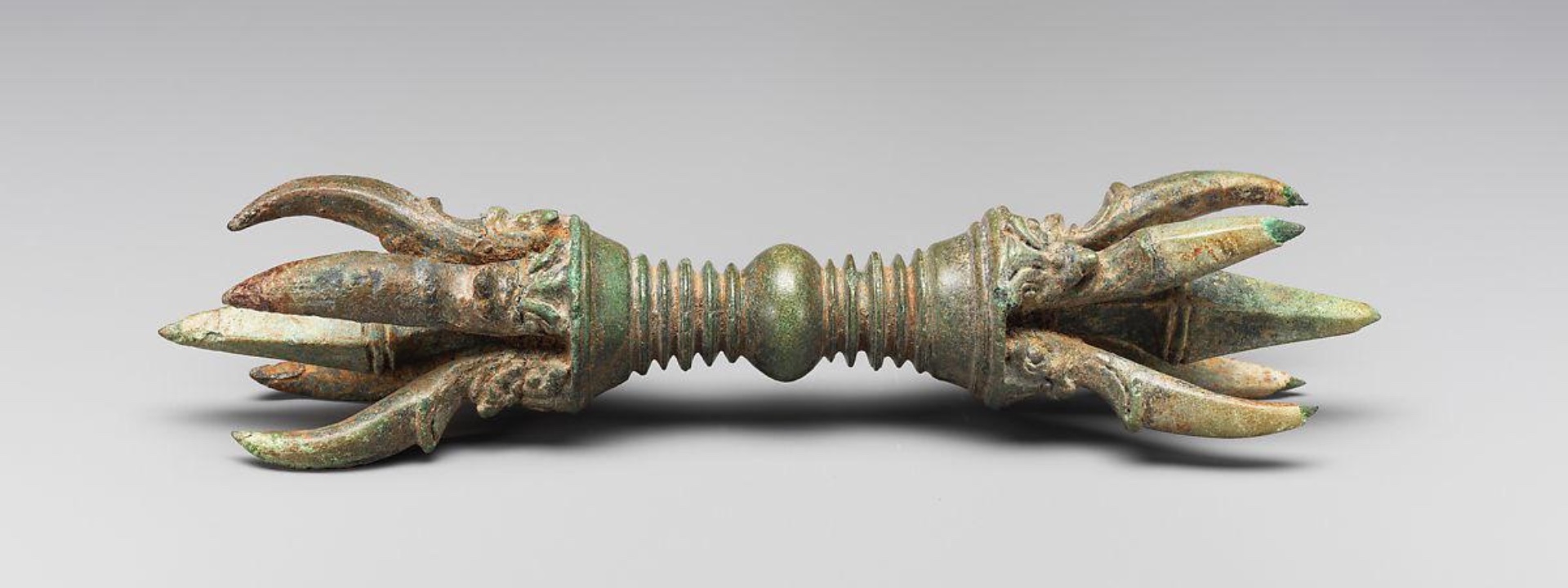
Symbolism
Indestructibility
The vajra’s primary association is with that which cannot be destroyed. This is not physical hardness alone, but the quality of awakened mind that remains untouched by confusion, emotional turbulence, or the passage of time. Where ordinary experience feels fragile and fleeting, the vajra points to a dimension of being that has always been perfectly stable.
Thunderbolt and Diamond As a thunderbolt, the vajra suggests a sudden, illuminating flash that dispels darkness in an instant. As a diamond, it suggests a clarity that cuts through the densest layers of misunderstanding. Both metaphors reinforce the same core idea: the true nature of mind is luminous, sharp, and indivisible. It should be noted, however that Vajra is NOT a thunderbolt, but a sceptre.
Method and Wisdom In ritual, the vajra is held in the right hand, representing the masculine principle of skilful means—compassion enacted as activity. The left hand holds the bell, representing the feminine principle of Prajna — the direct perception of emptiness. Neither alone is complete; the union of method and wisdom is what gives Vajrayana practice its transformative power.
Five Prongs, Five Wisdoms
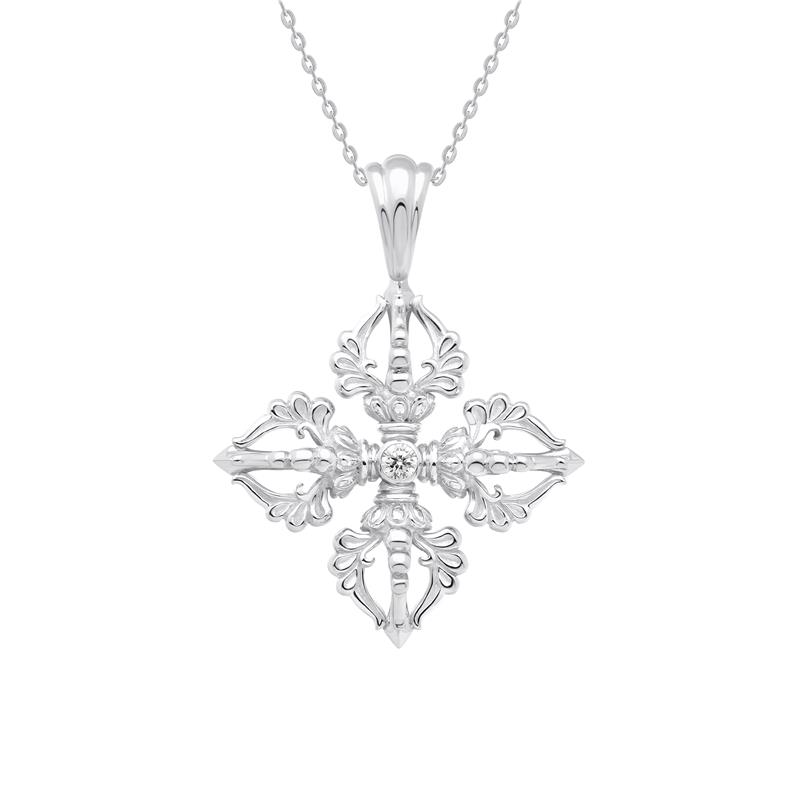
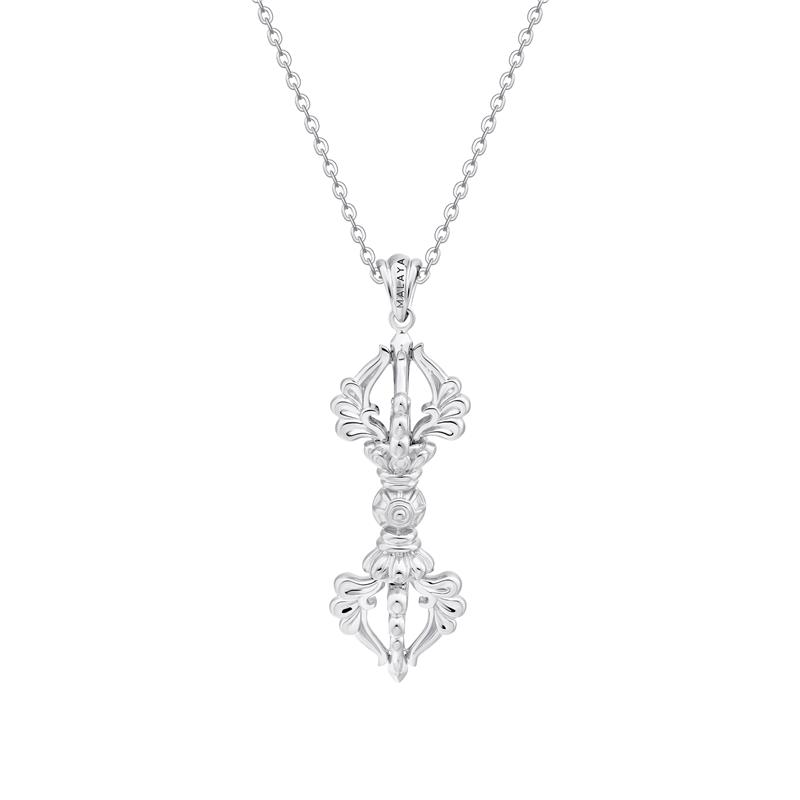
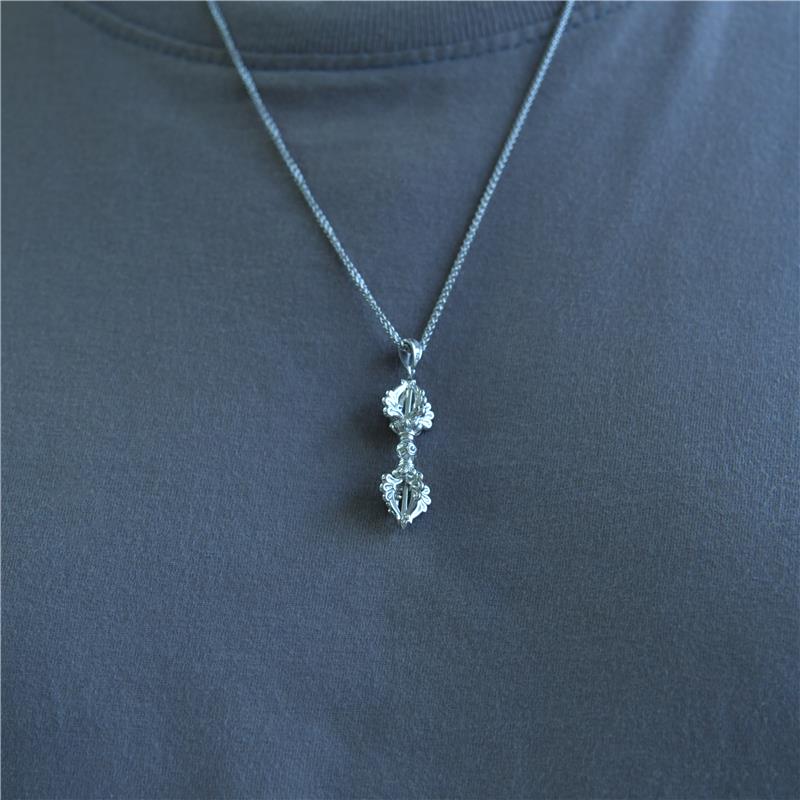
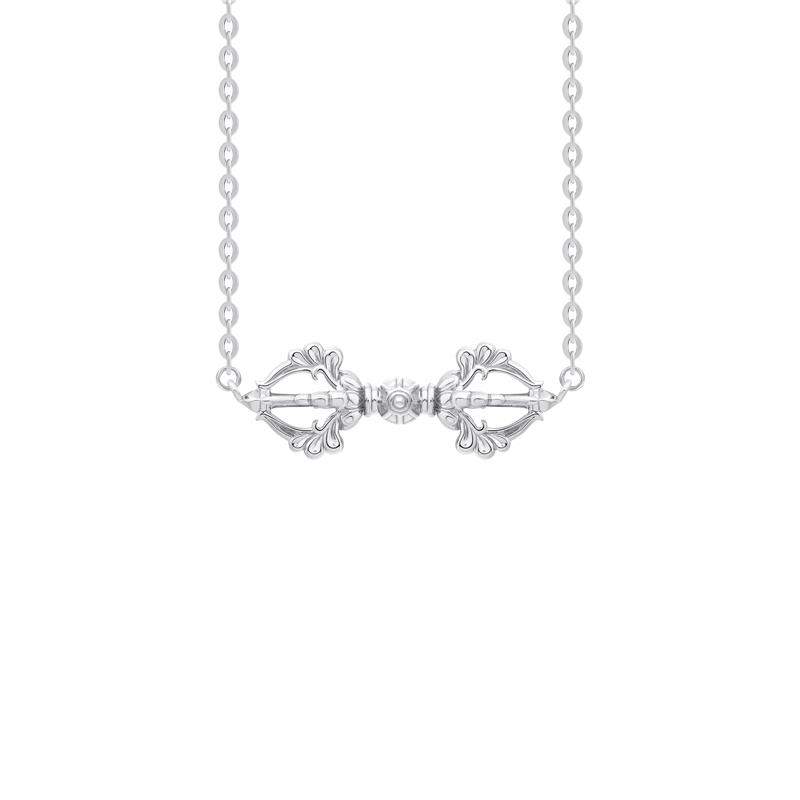
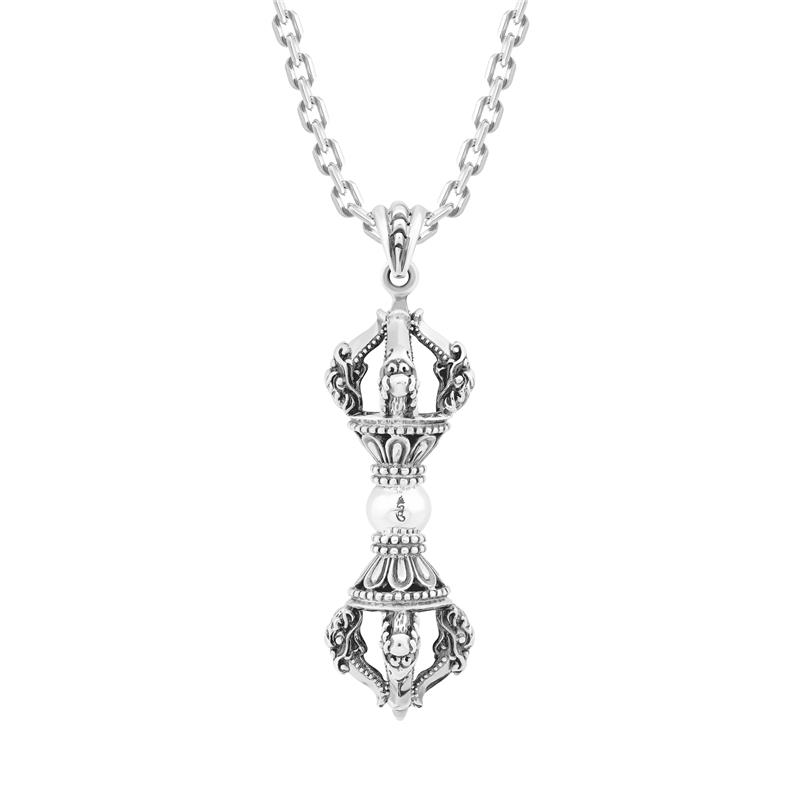 Vajra Pendant Large — Silver, With ChainThe five-pronged vajra, which is the most frequently depicted form, maps onto the five primordial wisdoms (yeshe nga). These are not separate insights but five facets of primal awareness (Yeshe): the wisdom of the basic space of phenomena, mirror-like wisdom, the wisdom of equality, discriminating wisdom, and all-accomplishing wisdom. The prongs converging into a single shaft illustrate how the apparently
multiple aspects of awakening resolve into one unified reality. Other variants include 9 pronged, 3 pronged and even a single pronged vajra.
Vajra Pendant Large — Silver, With ChainThe five-pronged vajra, which is the most frequently depicted form, maps onto the five primordial wisdoms (yeshe nga). These are not separate insights but five facets of primal awareness (Yeshe): the wisdom of the basic space of phenomena, mirror-like wisdom, the wisdom of equality, discriminating wisdom, and all-accomplishing wisdom. The prongs converging into a single shaft illustrate how the apparently
multiple aspects of awakening resolve into one unified reality. Other variants include 9 pronged, 3 pronged and even a single pronged vajra.
The Double Vajra (Vishva-vajra)
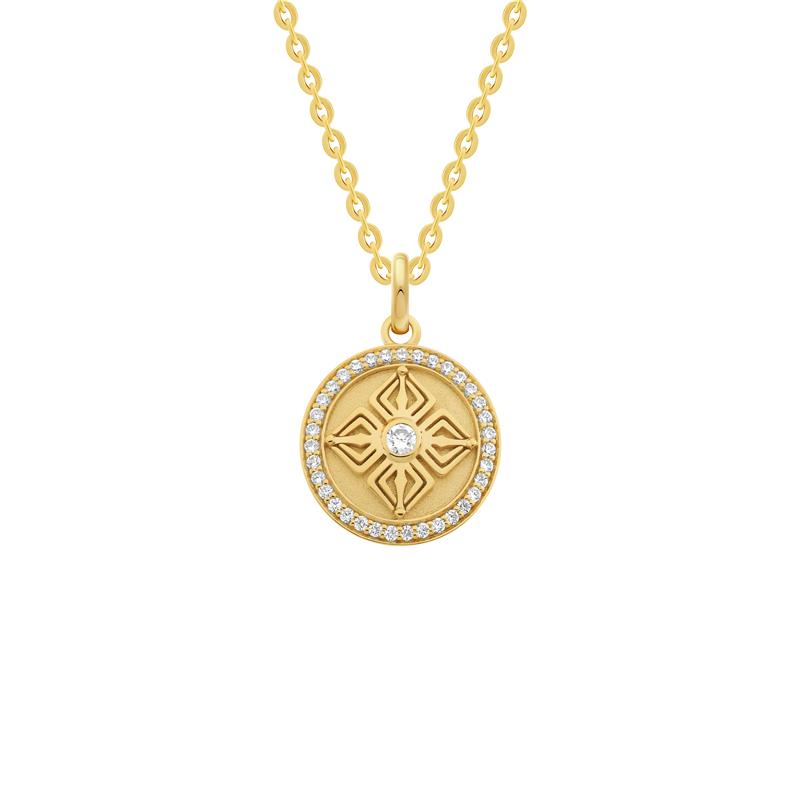
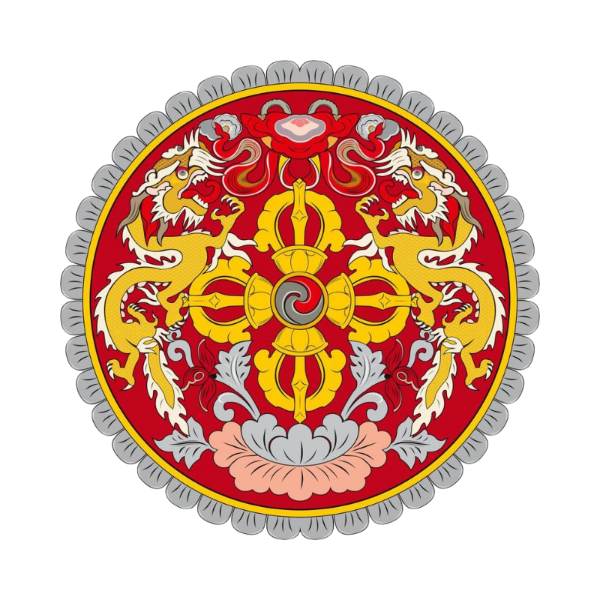
When two vajras are crossed at the central hub to form a double vajra, the symbol represents absolute stability. It is the foundation of the mandala, the unchanging ground upon which the entire sacred architecture rests. It also is the implement of the Karma Family - one of the five Buddha Families. In Bhutan, the double vajra appears at the heart of the national emblem, signifying the unshakeable foundation of the kingdom. It appears on banknotes, Government buildings, temples.
Where it appears
The vajra is ubiquitous throughout the Himalayan Buddhist world. You will encounter it:
- in the hands of statues and thangka paintings of tantric deities
- as a ritual implement on monastery altars
- carved into wooden pillars and temple doorframes
- engraved on metal prayer wheels
- embossed on ritual textiles and brocade as a decorative motif on furniture and architectural friezes
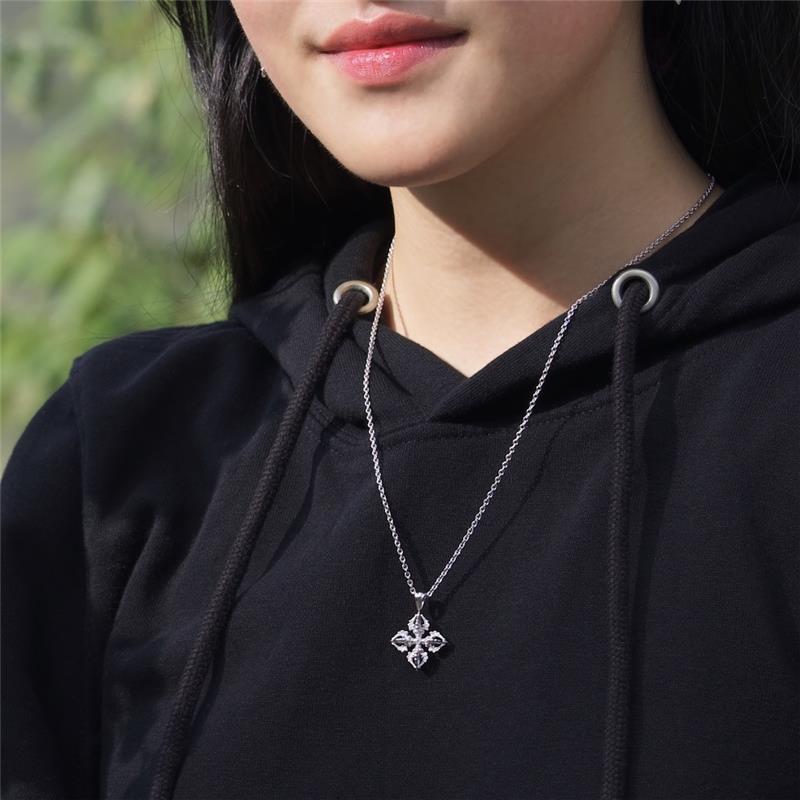
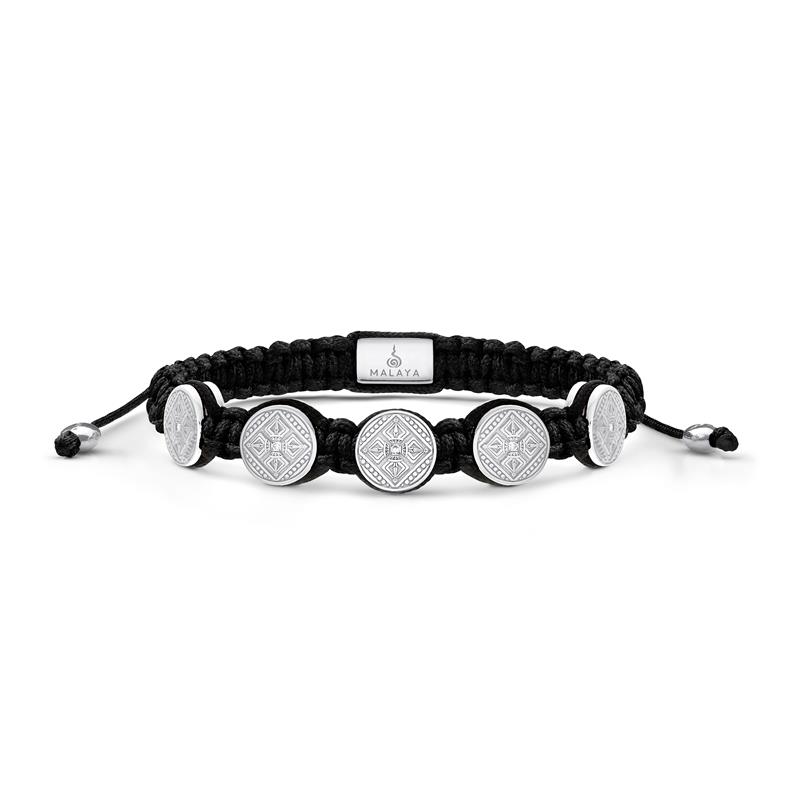
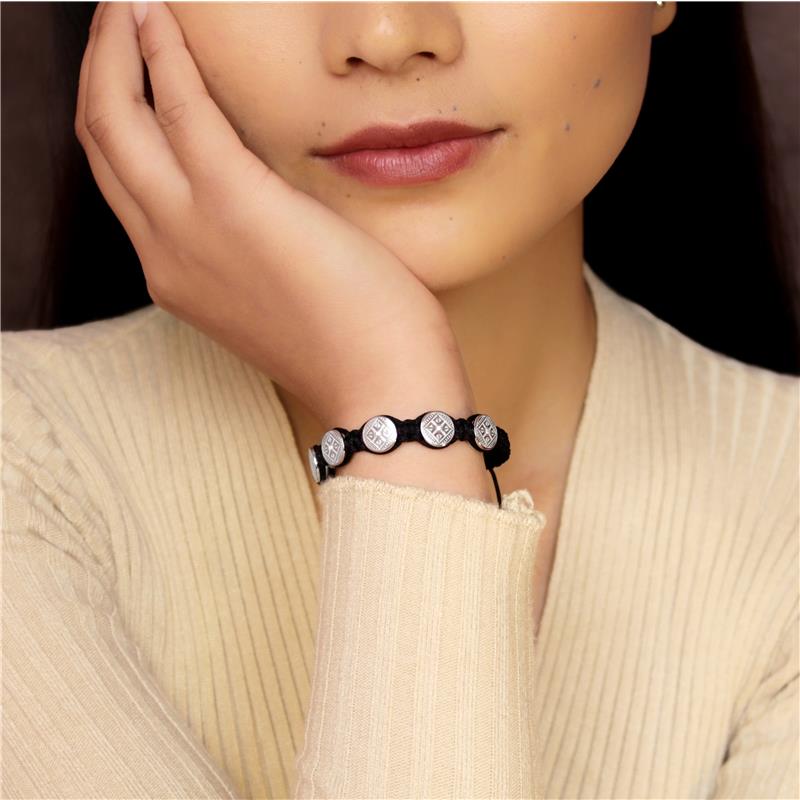
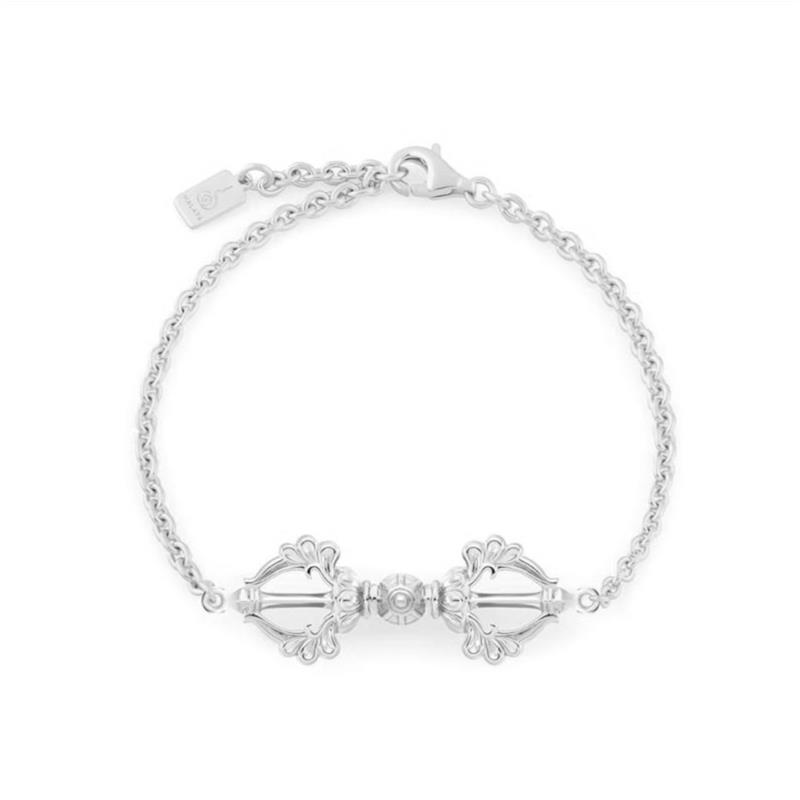
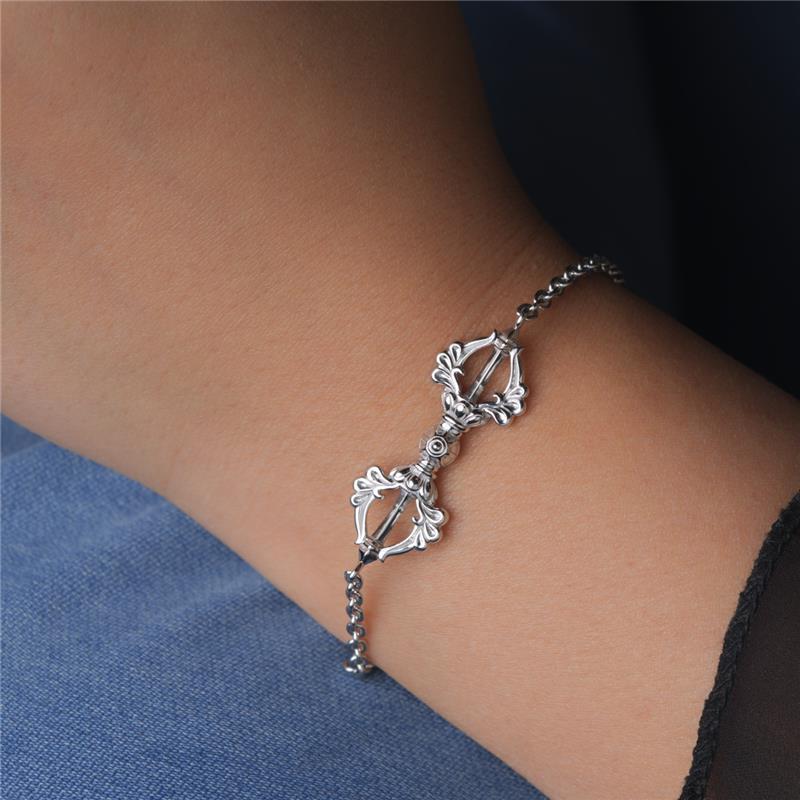
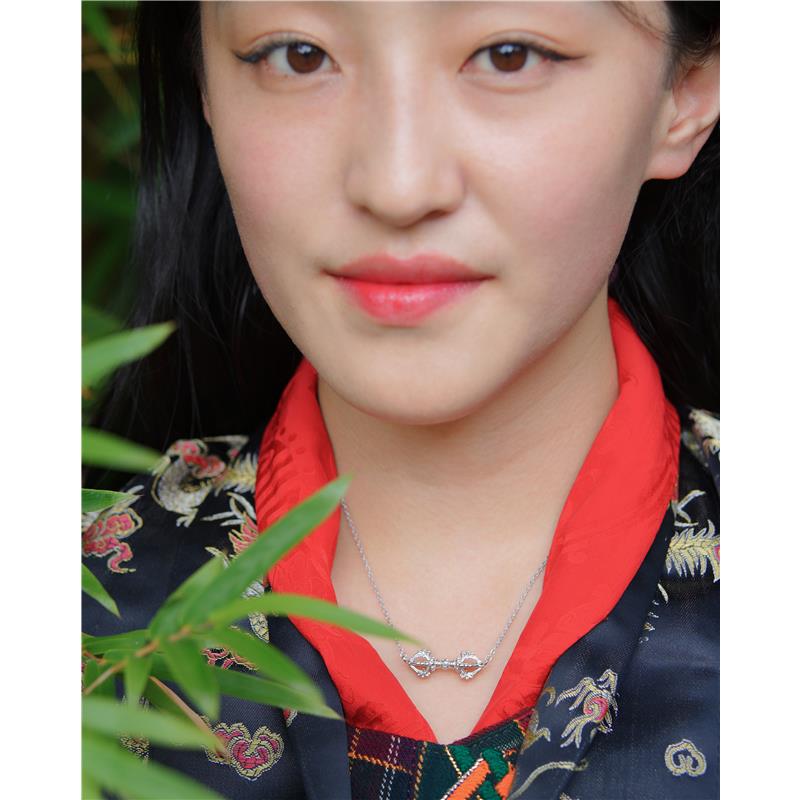
- integrated into jewellery, from pendants Vajra Pendant, Medium Size. Silver, with chain 62-45cm to bracelets Vajra Chain Bracelet, Silver, Medium, Flat 3 Prongs, 19cm
Its presence is so pervasive that it becomes almost invisible to the local eye, yet every instance is a subtle reminder of stability and indestructibility.
Use in ritual
The vajra is never merely decorative within a ritual context. A practitioner holds it during ceremonies, meditations, and empowerments, often together with the bell. The vajra is used to mark offerings, to encircle the ritual space, and to invoke the presence of enlightened beings. In some advanced practices, the practitioner visualises the vajra at the heart centre, radiating light that purifies confusion.
The double vajra serves as the foundation of the mandala palace during elaborate tantric rituals, physically represented by a crossed vajra placed under the central deity’s seat. This underscores the idea that the entire practice rests upon indestructible wisdom.
In jewellery
The vajra has been a recurring motif in Malaya’s work from the earliest collections. Its clean, symmetrical lines translate naturally into precious metal, and its layered meanings reward a lifetime of contemplation.
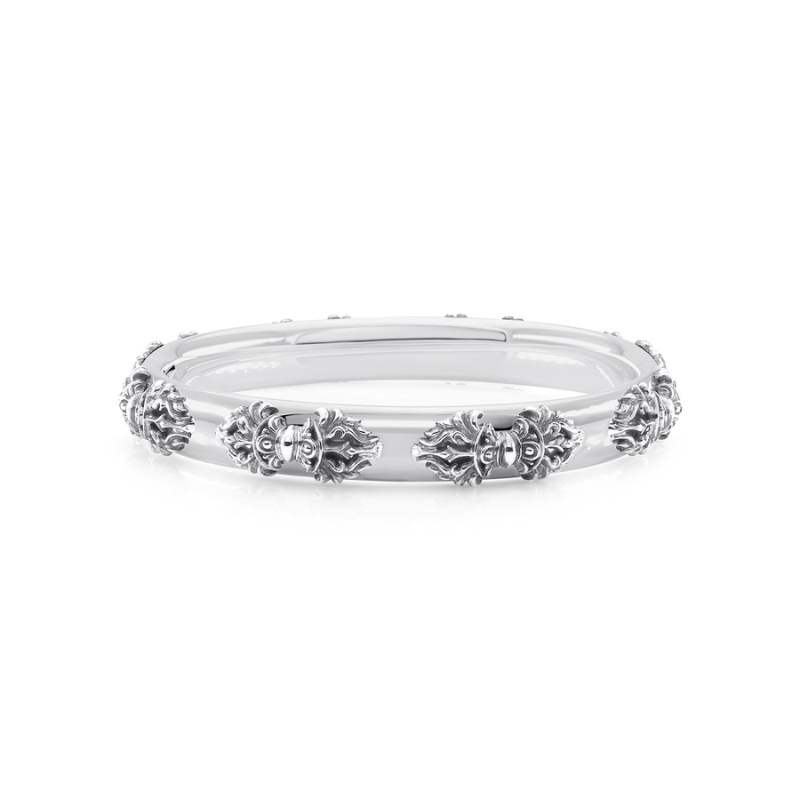
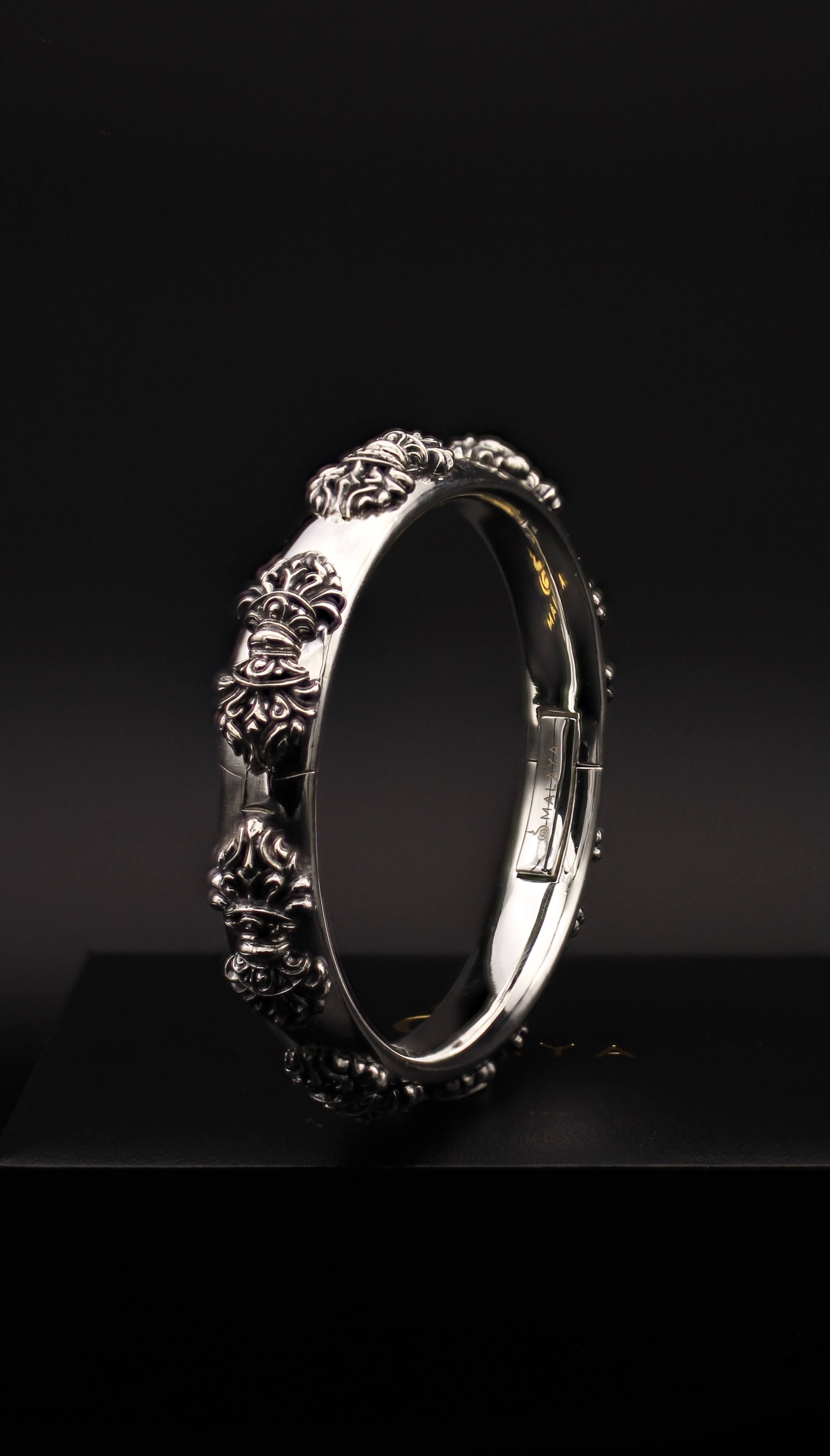
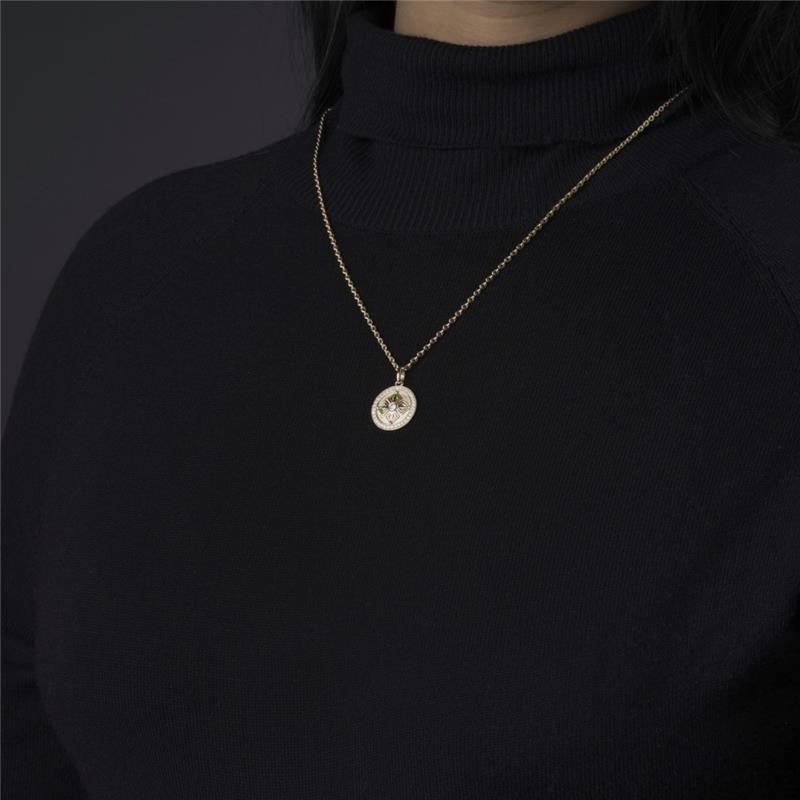
Rather than reproducing the full ritual object, our designs often isolate the vajra’s pronged crown, allowing it to stand as an architectural detail on rings, bracelets, and pendants. The double vajra appears on bangles and rings, while the continuous vajra chain bracelet transforms the symbol into a flexible, wearable pattern.
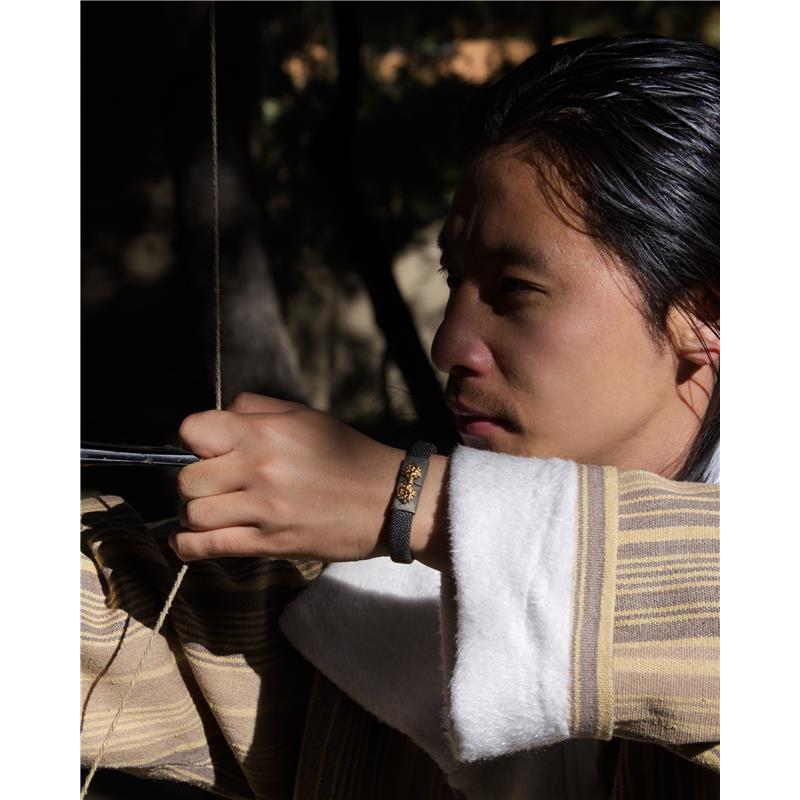
The Vajra Clasp Bracelet 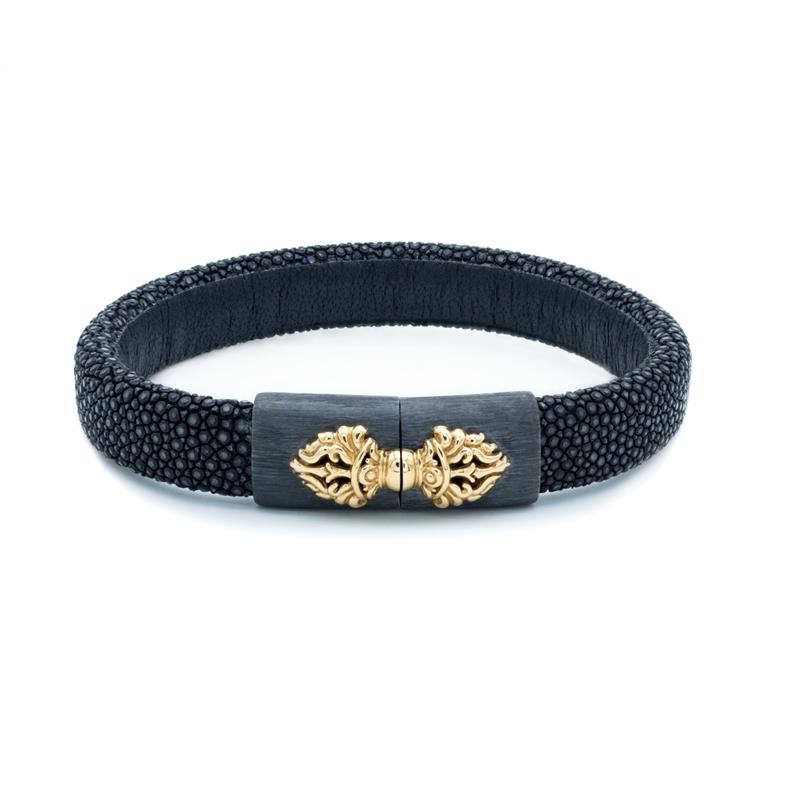 Vajra Clasp Bracelet, Two Tone Noir — Silver Oxidized Vajra Clasp Bracelet what 18k solid gold vajra, sting-ray leather, Noir color takes a different approach, concealing a secure lock within a finely crafted vajra centrepiece. In rose gold on tan leather, or solid gold on black, the piece quietly embodies strength without raising its voice. The smallest iterations of the vajra pendant, including a delicate micro pendant, were created for those who want to carry the symbol close to the skin every day.
Explore the collection
Vajra motifs can be found across our ranges as necklaces, bangles, chain bracelets, leather clasp bracelets, brooches, and rings. Many pieces are available in sterling silver, vermeil, solid 14k and 18k gold, with options for diamonds or coloured gemstones. Certain designs, like the Vajra Clasp Bracelet, can be personalised with an engraving on the inner clasp.